Address
Malik Saleem Plaza, New City, Wah
Pakistan
WhatsApp: +92 327 510047
Email: info@developmech.com
Work Hours
Monday to Friday: 3PM - 11AM
Weekend: 10AM - 5PM
Address
Malik Saleem Plaza, New City, Wah
Pakistan
WhatsApp: +92 327 510047
Email: info@developmech.com
Work Hours
Monday to Friday: 3PM - 11AM
Weekend: 10AM - 5PM

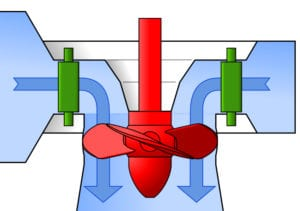
As the world moves toward renewable and sustainable energy solutions, hydropower continues to play an important role in electricity generation. Among various hydraulic turbines, the Kaplan Turbine is one of the most efficient turbines used for low-head and high-flow water conditions.
The Kaplan turbine, invented by Austrian engineer Viktor Kaplan, is famous for its adjustable blades and high efficiency under varying flow conditions. Its advanced design allows it to maintain excellent performance even when water discharge changes significantly.
In modern hydropower engineering, Computational Fluid Dynamics (CFD) and simulation technologies have greatly improved Kaplan turbine design, efficiency, and reliability.
This blog explains the working principle, construction, design, simulation, applications, advantages, and modern technological developments of Kaplan turbines.
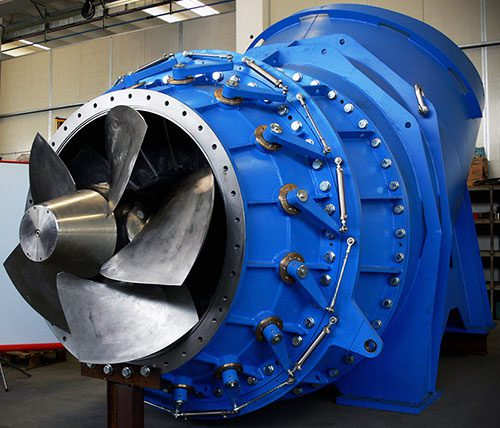
The Kaplan turbine is an axial-flow reaction turbine specially designed for:
Unlike Pelton turbines that operate on impulse force, the Kaplan turbine mainly works through the reaction principle.
Water flows parallel to the turbine shaft, and the pressure difference across the blades produces rotational motion.
The Kaplan turbine was developed in 1913 by Viktor Kaplan.
It was designed to efficiently utilize low-head hydropower resources where traditional turbines were less effective.
Today, Kaplan turbines are widely used in:
The Kaplan turbine works on the principle of:
“Conversion of pressure energy and kinetic energy of flowing water into mechanical energy through reaction force.”
Water enters the turbine through guide vanes and flows axially over the runner blades.
As water passes through the blades:
The rotating shaft drives an electrical generator to produce electricity.
The spiral casing distributes water uniformly around the turbine.
Guide vanes regulate:
They are adjustable and help maintain turbine efficiency under changing operating conditions.
The runner contains adjustable blades similar to a ship propeller.
The blade angle can be adjusted automatically depending on water flow conditions.
This is the most important feature of the Kaplan turbine.
The hub connects the blades to the turbine shaft and contains the blade adjustment mechanism.
The draft tube helps recover kinetic energy from exiting water.
The shaft transfers rotational energy from the runner to the generator.
The Kaplan turbine consists of:
The runner resembles a propeller with adjustable blades mounted on a central hub.
Water flows axially through the turbine and rotates the runner efficiently.
The flow process inside a Kaplan turbine is smooth and continuous.
Water enters the spiral casing from the penstock.
Guide vanes control:
Water flows parallel to the shaft axis and strikes the adjustable runner blades.
The pressure difference across the blades generates lift force.
This lift force rotates the runner.
After transferring energy, water exits through the draft tube.
The draft tube converts velocity energy into pressure energy.
The Kaplan turbine maintains high efficiency because both:
are adjustable.
This dual regulation system allows efficient operation under varying flow conditions.
| Turbine Type | Head | Flow Rate | Working Principle |
|---|---|---|---|
| Pelton Turbine | High | Low | Impulse |
| Francis Turbine | Medium | Medium | Reaction/Mixed Flow |
| Kaplan Turbine | Low | High | Reaction/Axial Flow |
In earlier years, turbine design depended heavily on:
Modern engineering now uses:
to improve turbine performance.
Computational Fluid Dynamics (CFD) helps engineers analyze:
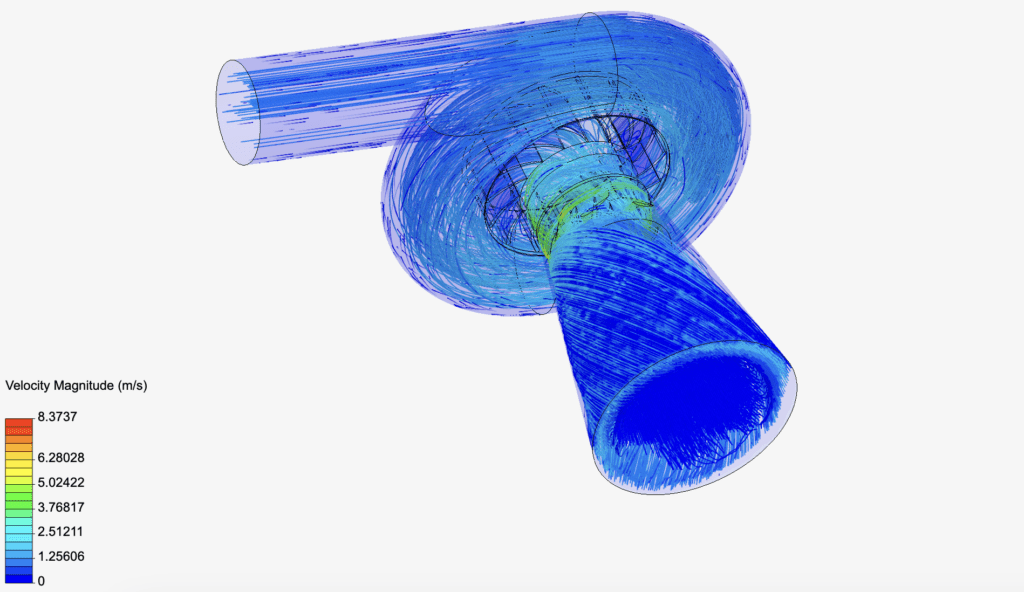
CFD allows engineers to optimize blade angles and improve turbine performance before manufacturing.
The Kaplan turbine blades are highly aerodynamic.
One of the major challenges in turbine operation is turbulence.
Turbulent flow may cause:
CFD simulations help identify turbulent regions and improve flow stability.
Finite Element Analysis helps engineers analyze:
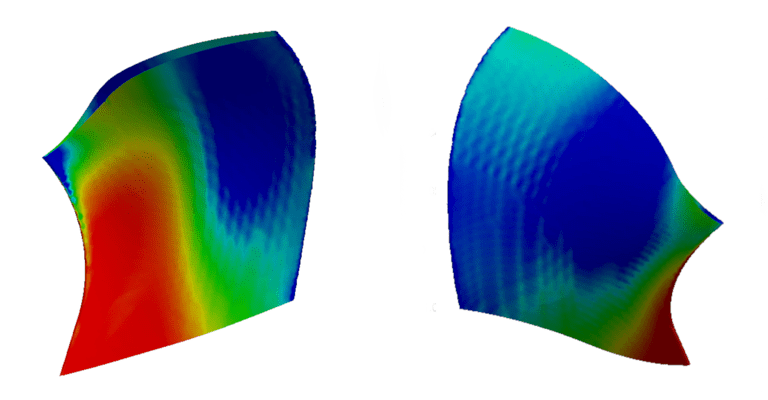
This ensures safe turbine operation under heavy hydraulic loads.
Modern simulation platforms such as SimScale allow engineers to:
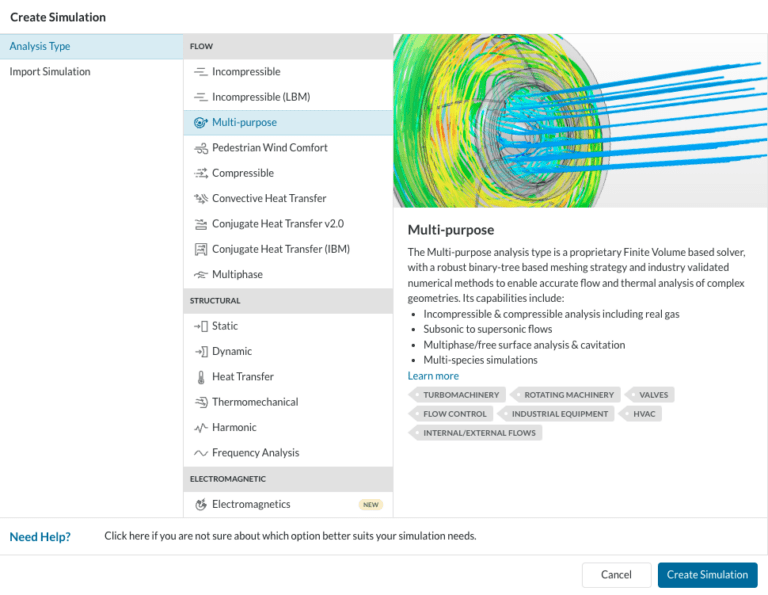
Cloud-native simulation reduces:
Like other reaction turbines, Kaplan turbines may experience cavitation.
Cavitation occurs when:
This may cause:
Kaplan turbines can achieve efficiencies above:90%−95%
Efficiency depends on:
Kaplan turbines are widely used in:
Regular maintenance is necessary for reliable operation.
They are among the most efficient turbines used in modern hydropower plants.
The Kaplan turbine is one of the most advanced and efficient hydraulic turbines used for low-head and high-flow hydropower applications. Its adjustable runner blades and guide vane system allow it to maintain excellent efficiency under varying operating conditions.
Modern CFD and FEA simulations have revolutionized Kaplan turbine design by improving flow analysis, reducing turbulence, minimizing cavitation, and optimizing blade performance.
As the demand for renewable energy increases worldwide, Kaplan turbines will continue playing a major role in sustainable hydropower generation.
