Address
304 North Cardinal St.
Dorchester Center, MA 02124
Work Hours
Monday to Friday: 7AM - 7PM
Weekend: 10AM - 5PM
Address
304 North Cardinal St.
Dorchester Center, MA 02124
Work Hours
Monday to Friday: 7AM - 7PM
Weekend: 10AM - 5PM
The piston is one of the most critical components in an internal combustion (IC) engine. It plays a vital role in converting the energy generated from fuel combustion into mechanical work. Understanding the parts of a piston is essential for every mechanical engineer, especially those interested in automotive and power systems.
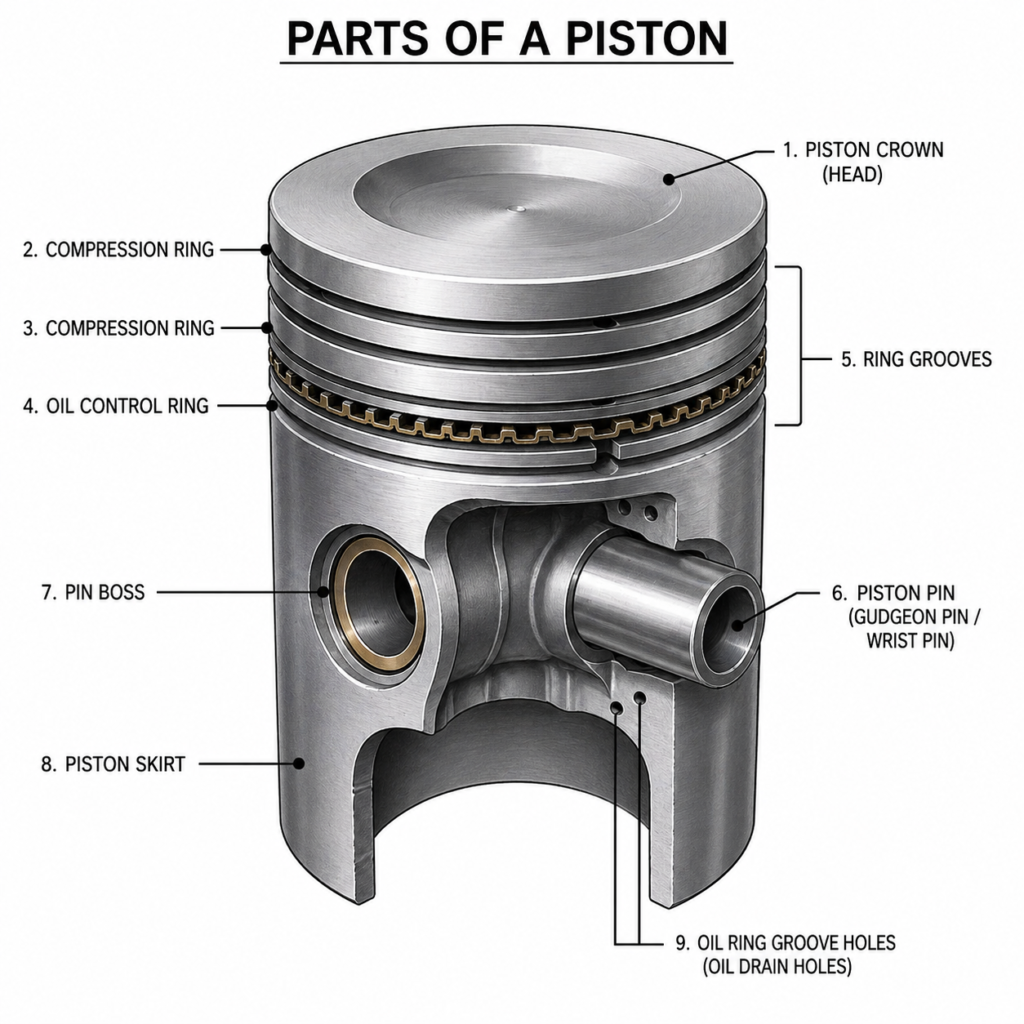
A piston is a cylindrical component that moves up and down inside the engine cylinder. It transfers the force generated by expanding gases to the crankshaft through the connecting rod, enabling engine motion.
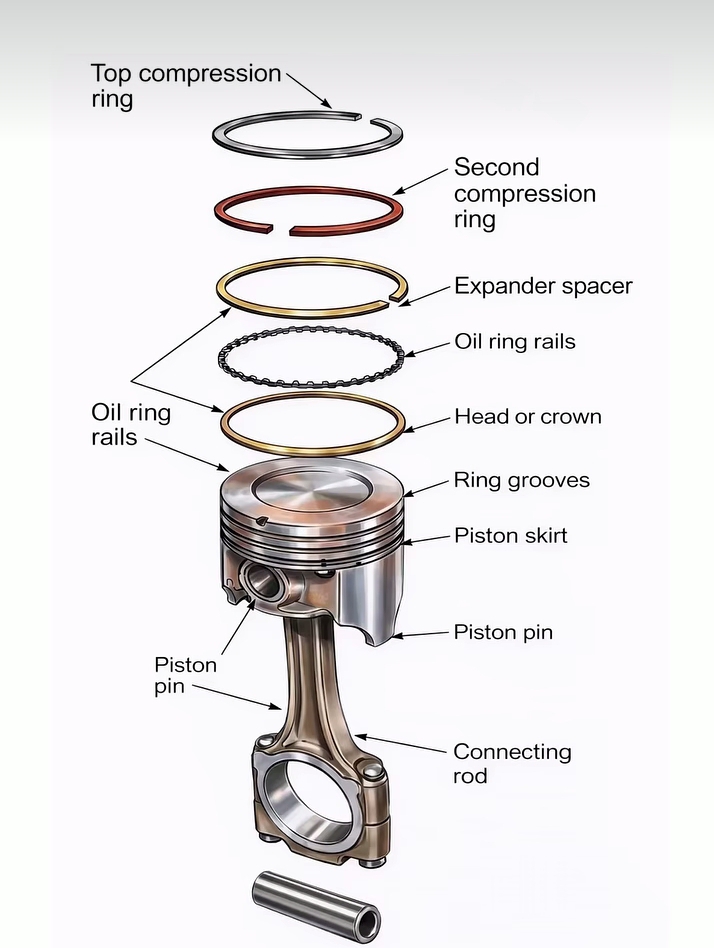
The piston crown is the top surface of the piston that comes in direct contact with combustion gases.
Functions:
Types of Piston Crown:
Piston rings are fitted into grooves on the outer diameter of the piston.
Types of Rings:
Functions:
These are slots cut into the piston where the piston rings are installed.
Functions:
The skirt is the lower part of the piston that guides it inside the cylinder.
Functions:
The piston pin connects the piston to the connecting rod.
Functions:
Pin bosses are reinforced sections inside the piston where the piston pin is mounted.
Functions:
Small holes behind the oil ring groove.
Functions:
Modern pistons are typically made from:
The piston is a small yet powerful component that directly influences engine efficiency and performance. Each part of the piston has a specific role, from sealing combustion gases to maintaining proper lubrication and reducing friction.
A solid understanding of piston components not only helps in engine design but also improves troubleshooting and maintenance skills.
