Address
304 North Cardinal St.
Dorchester Center, MA 02124
Work Hours
Monday to Friday: 7AM - 7PM
Weekend: 10AM - 5PM
Address
304 North Cardinal St.
Dorchester Center, MA 02124
Work Hours
Monday to Friday: 7AM - 7PM
Weekend: 10AM - 5PM

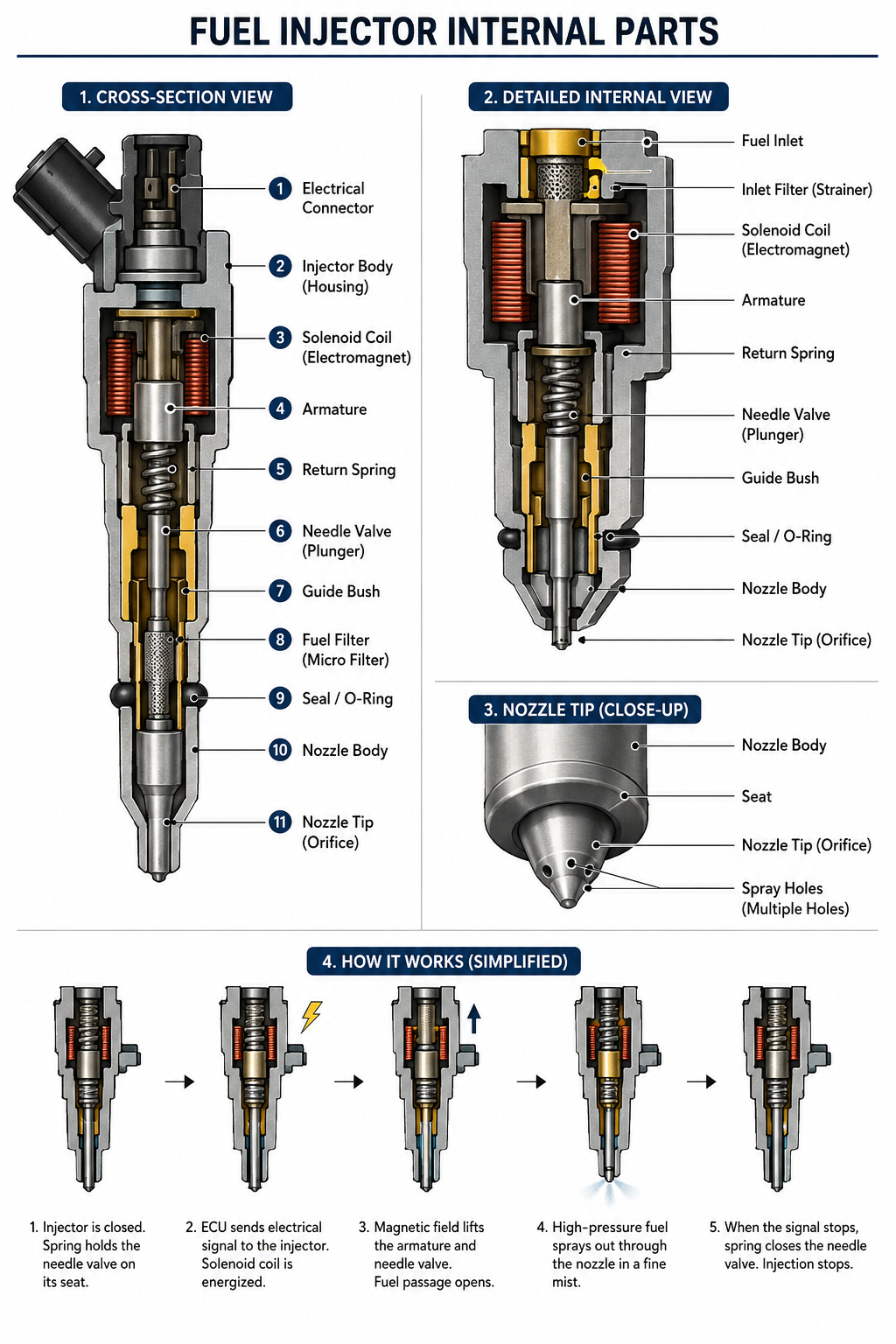
Fuel injectors are one of the most critical components in modern internal combustion engines. They ensure precise delivery of fuel into the combustion chamber, improving efficiency, performance, and emissions. Understanding the internal parts of a fuel injector helps engineers and enthusiasts better understand how engines achieve optimal combustion.
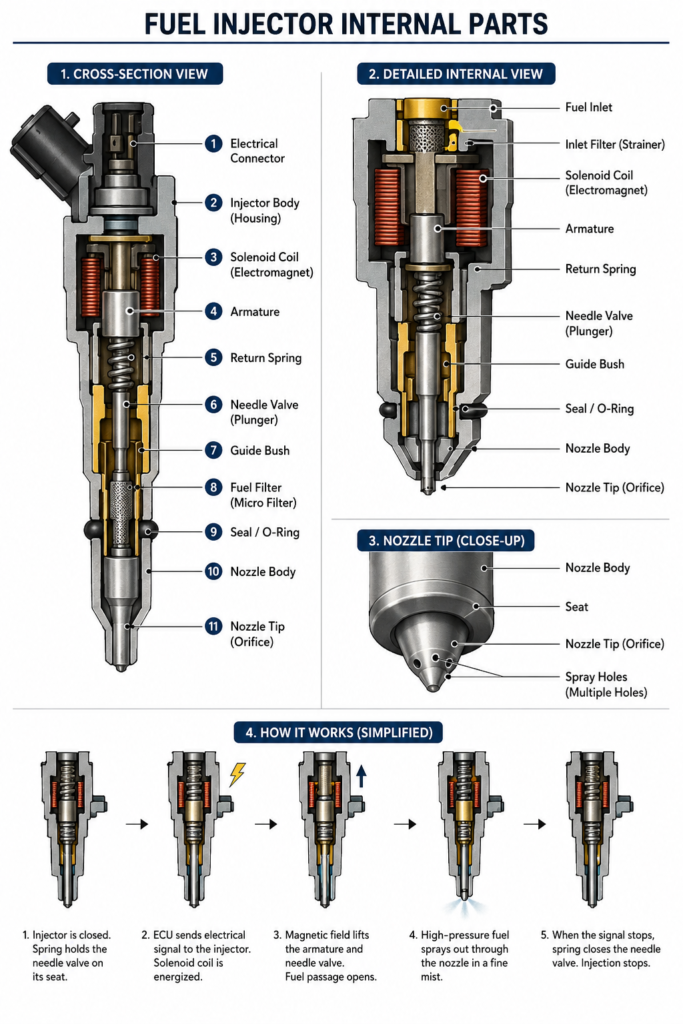
A fuel injector is an electronically controlled device that sprays fuel into the engine in a fine mist. This process allows better mixing of fuel with air, leading to efficient combustion.
A fuel injector may look small from the outside, but internally it consists of several precision-engineered components:
The injector body is the outer casing that holds all internal components together. It is typically made of high-strength steel to withstand high pressure and temperature.
Function:
The solenoid is an electromagnetic coil that controls the opening and closing of the injector.
Function:
The armature is a movable component inside the solenoid.
Function:
This is a small, precisely machined component that opens and closes the fuel passage.
Function:
The nozzle is the tip of the injector through which fuel is sprayed.
Function:
A small but important component that ensures proper operation.
Function:
A tiny filter is located at the inlet of the injector.
Function:
These are rubber or polymer seals used at different points.
Function:
This process happens in milliseconds and repeats many times per second.
✔ Improved fuel efficiency
✔ Better engine performance
✔ Reduced emissions
✔ Precise fuel control
Fuel injectors are highly precise devices made up of several internal components working together. Each part plays a vital role in ensuring accurate fuel delivery, which directly impacts engine performance and efficiency. Understanding these internal parts helps in better maintenance, troubleshooting, and design improvements.
