Address
304 North Cardinal St.
Dorchester Center, MA 02124
Work Hours
Monday to Friday: 7AM - 7PM
Weekend: 10AM - 5PM
Address
304 North Cardinal St.
Dorchester Center, MA 02124
Work Hours
Monday to Friday: 7AM - 7PM
Weekend: 10AM - 5PM

Introduction
Centrifugal pumps are among the most widely used pumps in industries, water supply systems, HVAC plants, agriculture, and power stations. They work by converting rotational energy from a motor into fluid flow energy using an impeller.
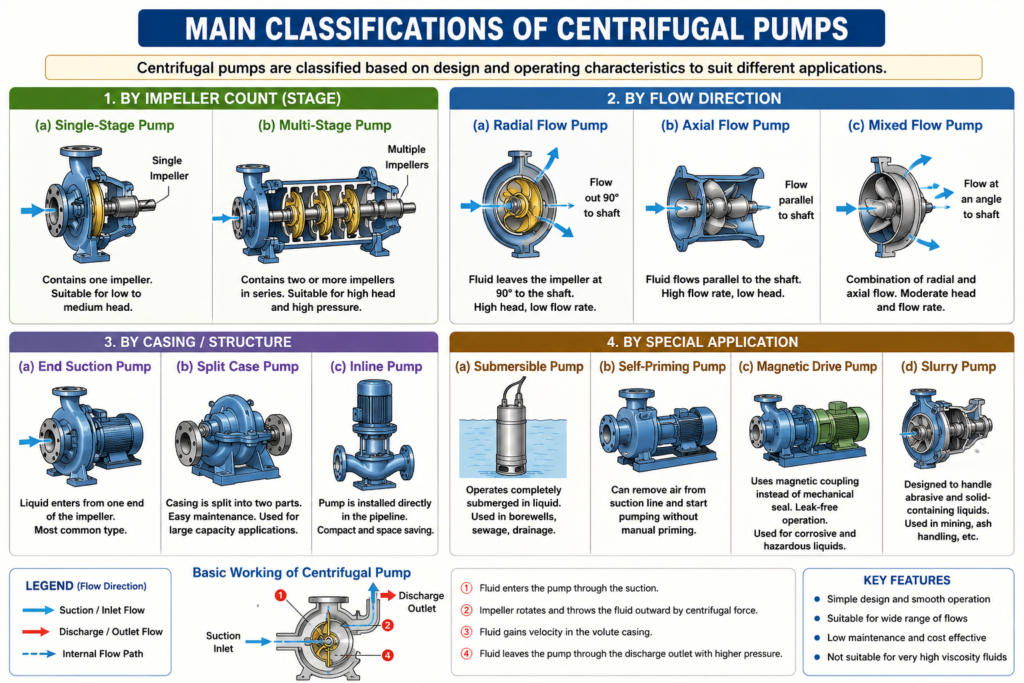
Because different applications require different operating conditions, centrifugal pumps are classified based on several factors such as impeller stages, flow direction, casing design, and special applications.
In this blog, we will explain the main classifications of centrifugal pumps, their working features, and industrial applications.
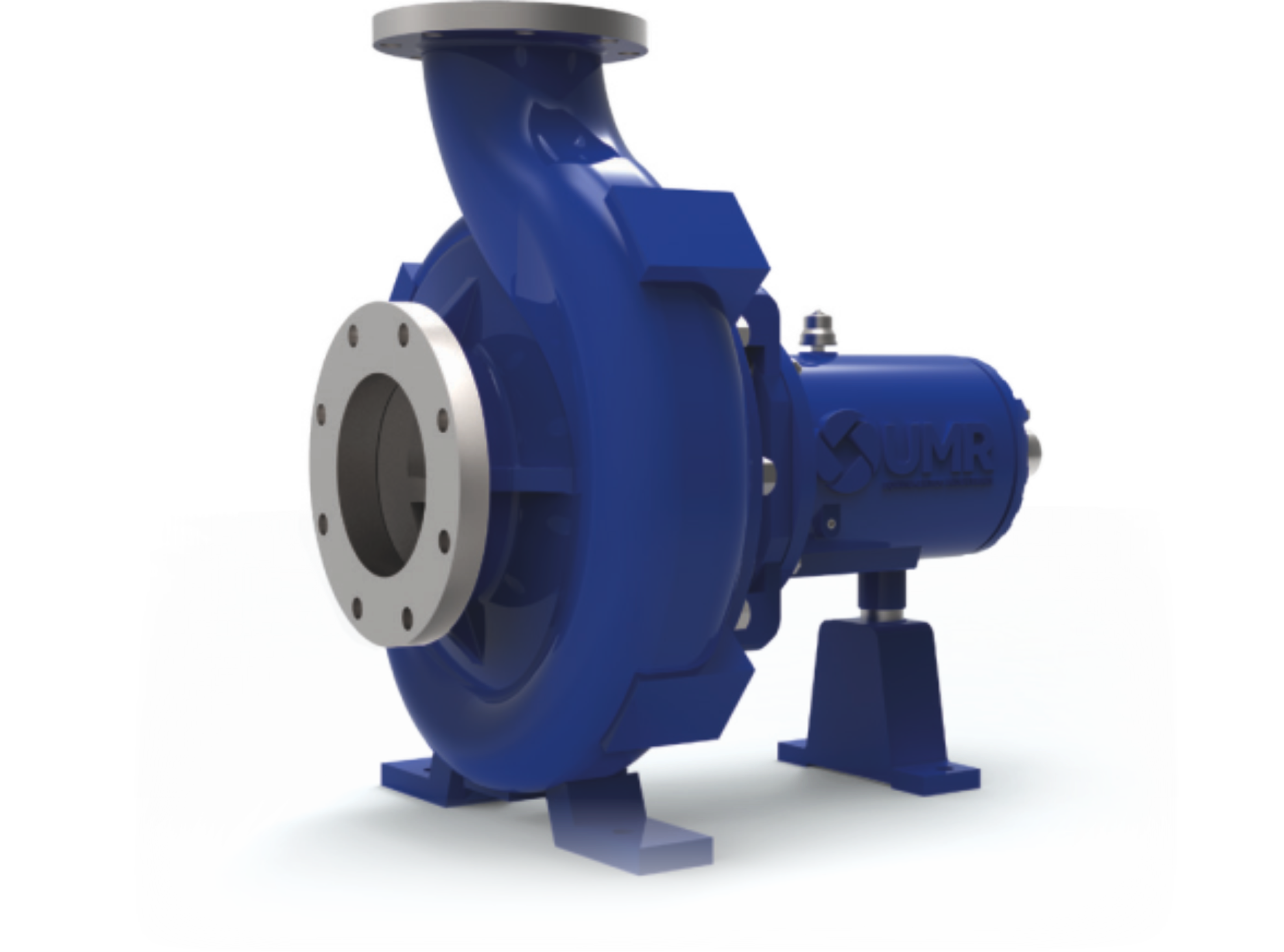
A centrifugal pump is a hydraulic machine that uses centrifugal force to move liquids from one place to another.
In simple words:
The impeller rotates and pushes liquid outward, creating flow and pressure.
Centrifugal pumps are mainly classified into four categories:
1. Classification by Impeller Count (Stage)
This classification depends on the number of impellers used in the pump.
A) Single-Stage Centrifugal Pump
A single-stage pump contains only one impeller.
Features:
Applications:
Advantages:
B) Multi-Stage Centrifugal Pump
A multi-stage pump contains two or more impellers connected in series.
Features:
Applications:
Advantages:
2. Classification by Flow Direction
This classification depends on the direction of liquid flow through the impeller.
A) Radial Flow Pump
Liquid leaves the impeller at 90° to the shaft axis.
Features:
Applications:
Advantages:
B) Axial Flow Pump
Liquid flows parallel to the shaft axis.
Features:
Applications:
Advantages:
C) Mixed Flow Pump
Combines both radial and axial flow characteristics.
Features:
Applications:
Advantages:
3. Classification by Casing/Structure
This classification depends on pump casing design.
A) End Suction Pump
Liquid enters from one side of the impeller.
Features:
Applications:
Advantages:
B) Split Case Pump
Pump casing is split into two parts.
Features:
Applications:
Advantages:
C) Inline Pump
The pump is installed directly into pipeline systems.
Features:
Applications:
Advantages:
4. Classification by Special Applications
These pumps are designed for specific operating conditions.
A) Submersible Pump
Operates completely submerged in liquid.
Applications:
Advantages:
B) Self-Priming Pump
Can remove air automatically and start pumping without manual priming.
Applications:
Advantages:
C) Magnetic Drive Pump
Uses magnetic coupling instead of mechanical seals.
Features:
Applications:
Advantages:
D) Slurry Pump
Designed to handle abrasive and solid-containing liquids.
Applications:
Advantages:
Comparison Table
| Classification | Type | Main Feature |
| By Stage | Single Stage | One impeller |
| By Stage | Multi Stage | High pressure |
| By Flow | Radial Flow | High head |
| By Flow | Axial Flow | High flow |
| By Structure | End Suction | Compact |
| Special | Submersible | Underwater operation |
Advantages of Centrifugal Pumps
Disadvantages
Applications of Centrifugal Pumps
Conclusion
Centrifugal pumps are classified based on impeller stages, flow direction, casing structure, and special applications. Each type is designed to meet specific industrial requirements such as high pressure, large flow rate, compact installation, or handling corrosive fluids.
Understanding these classifications helps engineers select the right pump for efficient and reliable operation.
