Address
Malik Saleem Plaza, New City, Wah
Pakistan
WhatsApp: +92 327 510047
Email: info@developmech.com
Work Hours
Monday to Friday: 3PM - 11AM
Weekend: 10AM - 5PM
Address
Malik Saleem Plaza, New City, Wah
Pakistan
WhatsApp: +92 327 510047
Email: info@developmech.com
Work Hours
Monday to Friday: 3PM - 11AM
Weekend: 10AM - 5PM
Bolts are one of the most widely used fastening elements in mechanical and structural engineering. They are designed to hold machine parts together under different types of loads such as tension, shear, vibration, and fatigue.
However, when the applied load exceeds the bolt’s strength or due to poor design/installation, bolt failure occurs. Understanding bolt failure types is very important for safe and reliable machine design.
Bolt failure refers to the loss of structural integrity of a bolt due to excessive stress, improper loading, fatigue, or environmental effects. It can lead to joint failure, machine breakdown, or even accidents in critical systems.


7
This occurs when the axial load on the bolt exceeds its tensile strength. The bolt stretches and finally fractures.
Shear failure occurs when forces act perpendicular to the bolt axis, causing it to slide or cut through.


6
Fatigue failure happens due to repeated cyclic loading over time, even if the load is below the bolt’s yield strength.


6
In this failure, the threads of the bolt or nut get stripped due to excessive torque or poor material strength.


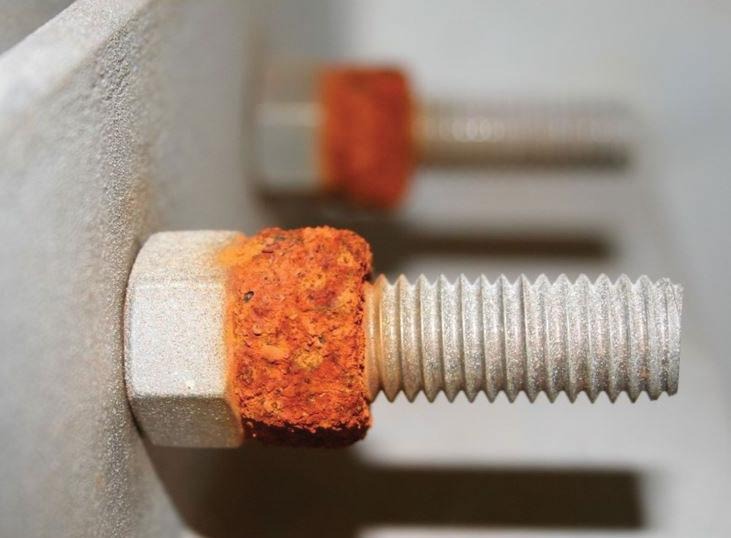
Corrosion weakens the bolt material due to environmental exposure such as moisture, chemicals, or salt.


8
Bolt failure can lead to serious mechanical and structural problems if not properly designed or maintained. Engineers must carefully analyze loading conditions, material properties, and environmental factors to prevent failure and ensure safety.
A strong understanding of bolt failure types is essential for mechanical design, automotive engineering, and structural applications.
