Address
304 North Cardinal St.
Dorchester Center, MA 02124
Work Hours
Monday to Friday: 7AM - 7PM
Weekend: 10AM - 5PM
Address
304 North Cardinal St.
Dorchester Center, MA 02124
Work Hours
Monday to Friday: 7AM - 7PM
Weekend: 10AM - 5PM

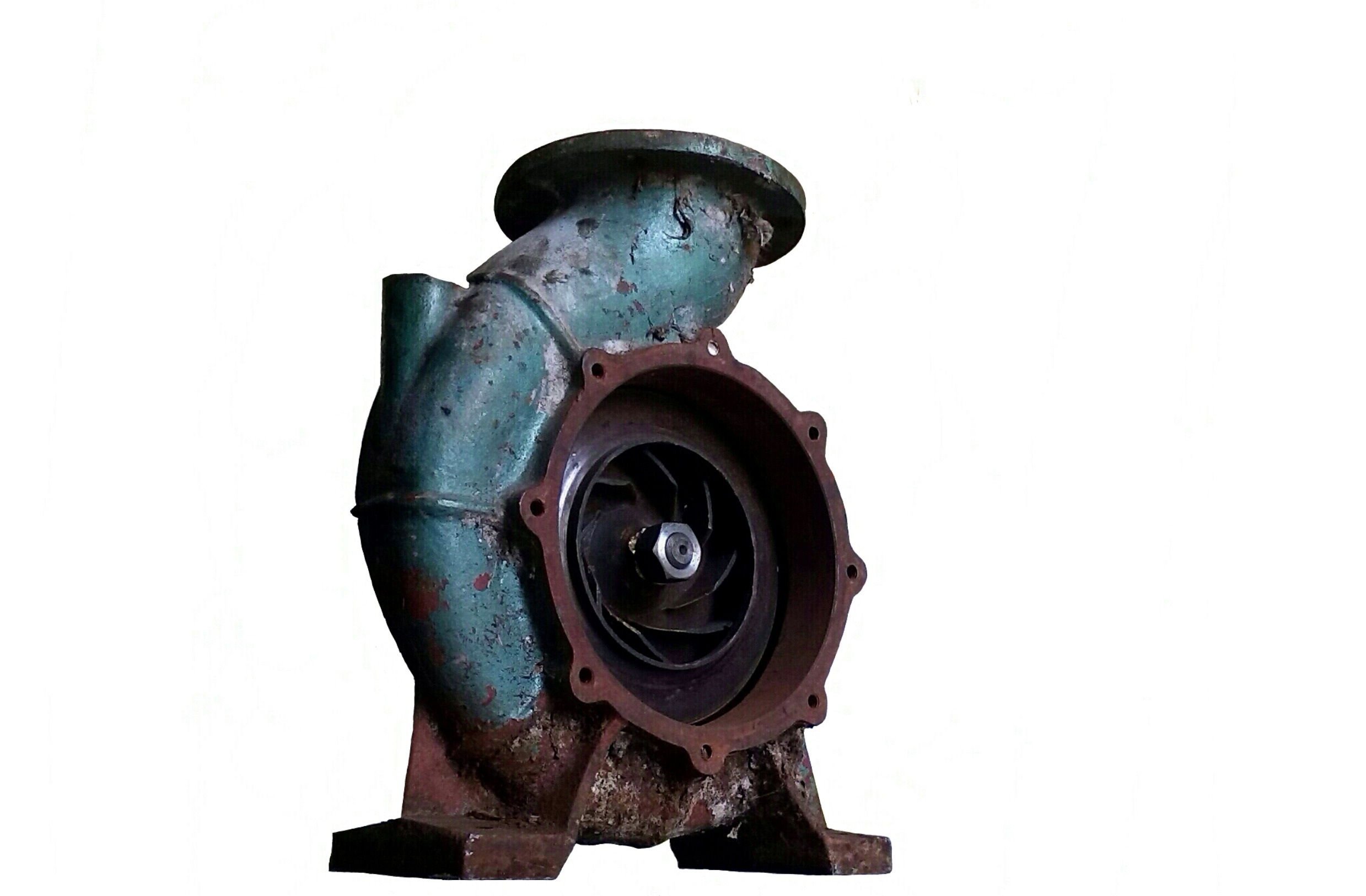
Centrifugal pumps are one of the most widely used types of pumps in industries, water supply systems, and HVAC applications. Their simple design, efficiency, and reliability make them essential for fluid transportation.
This article explains the working principle of a centrifugal pump in a simple and practical way.
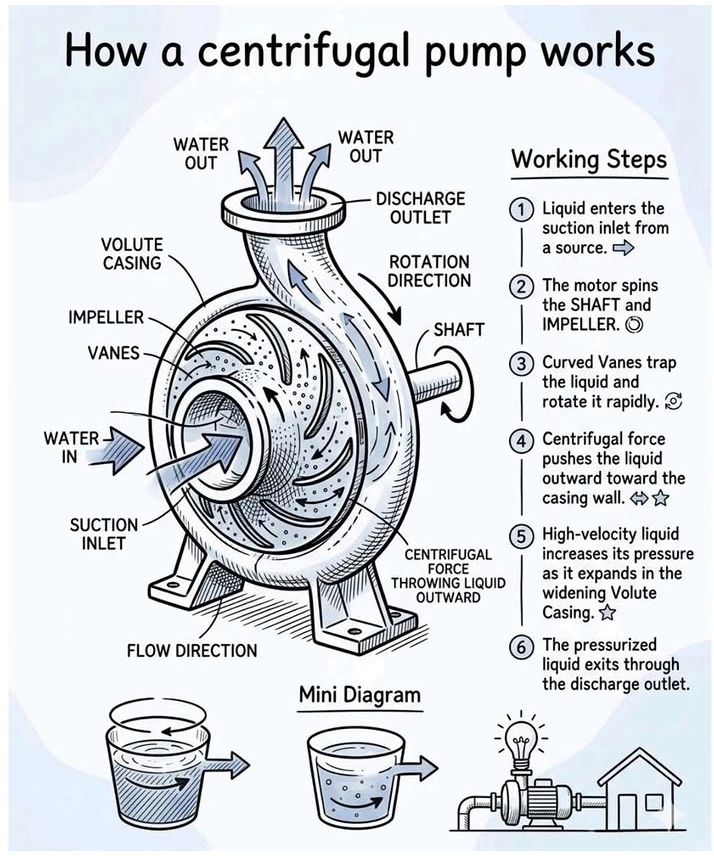
A centrifugal pump is a mechanical device used to move liquids by converting rotational energy from a motor into kinetic energy and then into pressure energy.
The operation of a centrifugal pump can be understood in the following steps:
Liquid enters through the suction inlet and reaches the center (eye) of the impeller.
The motor rotates the shaft, which in turn spins the impeller at high speed.
The curved vanes of the impeller trap the liquid and impart kinetic energy, causing it to move outward.
Due to centrifugal force, the liquid is pushed from the center toward the outer edges of the impeller.
As the high-velocity liquid enters the volute casing, its velocity decreases, and pressure increases.
Finally, the pressurized liquid exits through the discharge outlet and is delivered to the required location.
Centrifugal pumps operate on a simple yet powerful principle of converting rotational energy into fluid pressure. Understanding their working helps engineers design efficient systems and troubleshoot real-world problems effectively.
