Address
Malik Saleem Plaza, New City, Wah
Pakistan
WhatsApp: +92 327 5100047
Email: info@developmech.com
Work Hours
Monday to Friday: 3PM - 11AM
Weekend: 10AM - 5PM
Address
Malik Saleem Plaza, New City, Wah
Pakistan
WhatsApp: +92 327 5100047
Email: info@developmech.com
Work Hours
Monday to Friday: 3PM - 11AM
Weekend: 10AM - 5PM

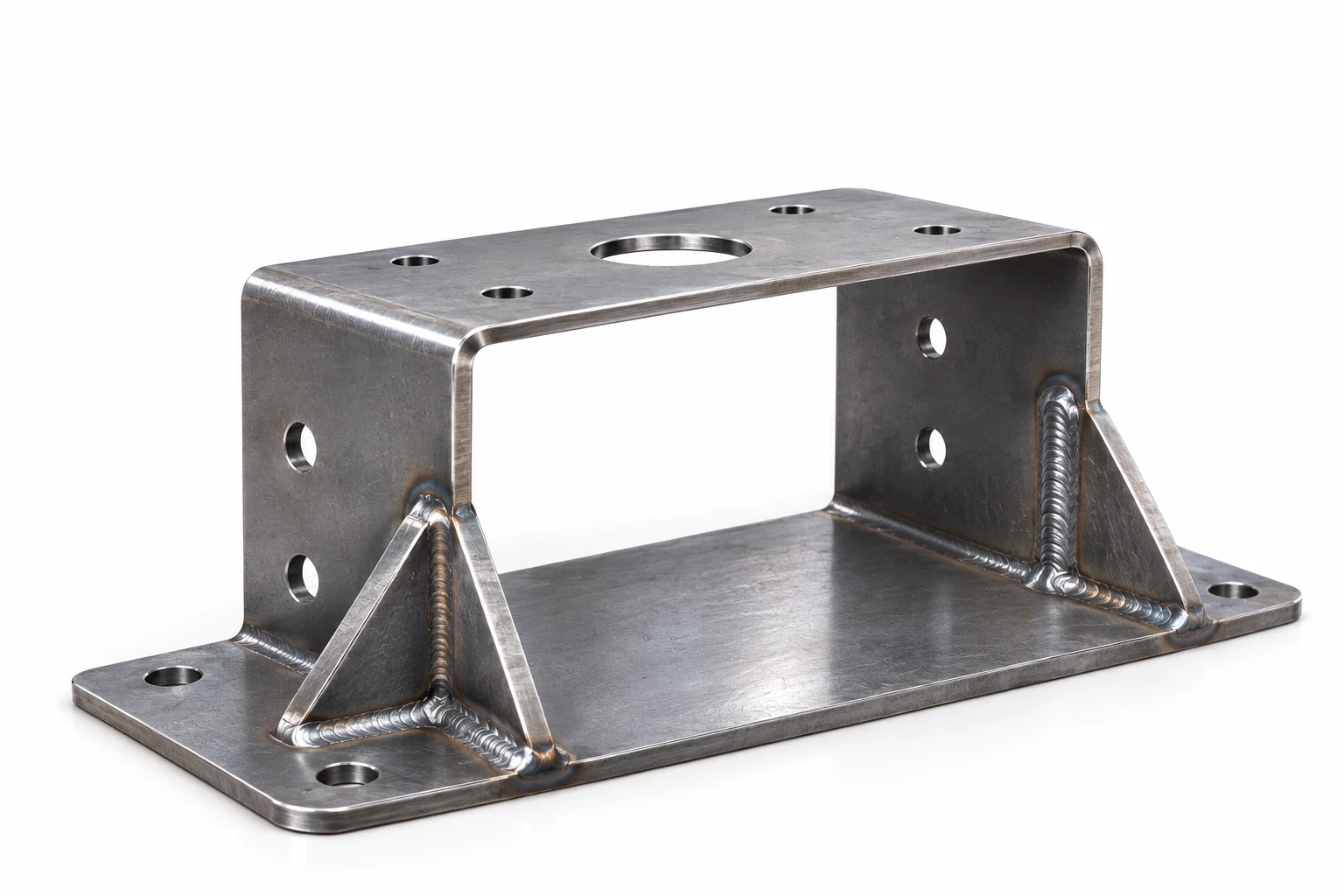
A sheet metal weldment springs back from every bend, distorts as the welds cool, buckles when it is thin, and cracks at the weld toe, so the part that comes off the bench is never quite the one on the drawing
Developmech | Structural, Fatigue & Fabrication Analysis
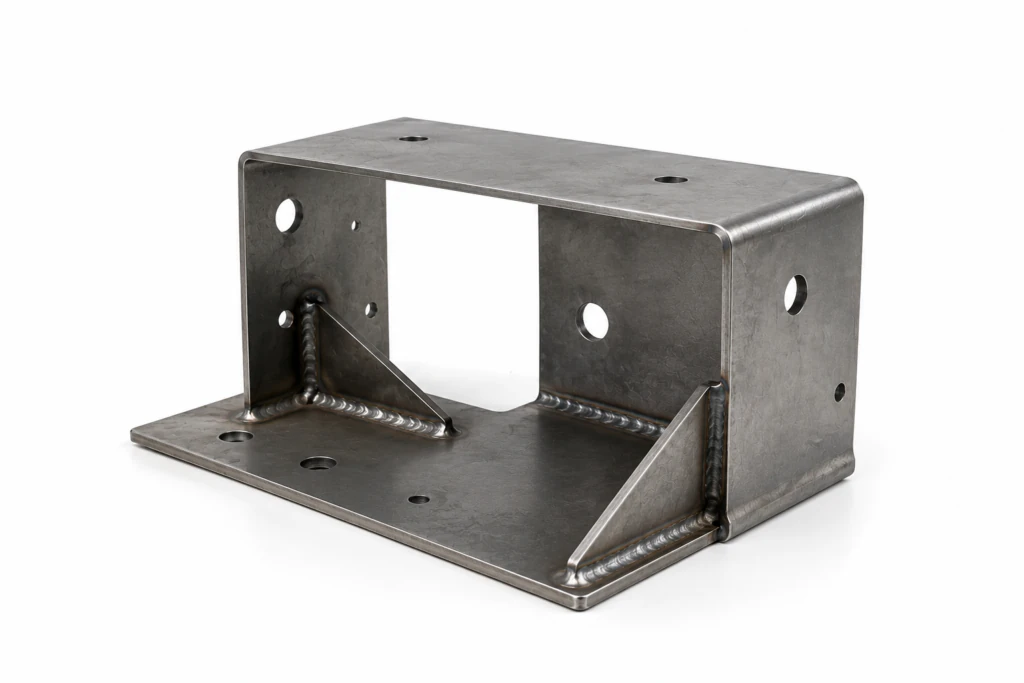
Sheet metal looks like the simplest thing in the shop. You cut a flat blank, bend it, weld a few pieces together, and you have a part. But a sheet metal weldment is not a solid part that happens to be thin, it is a flat sheet forced into shape and then heated and fused, and it fights back at every step. The part that comes off the bench is never quite the one on the drawing.
It fights back because bending and welding both leave the metal changed. A bend does not stay at the angle you pressed it to, it springs back. A weld does not just join two pieces, it shrinks as it cools and drags the metal with it. A thin panel does not stay flat, it buckles. And where the weld meets the plate, a sharp valley waits to start a fatigue crack. None of this shows on the flat pattern, and all of it decides whether the weldment is straight, strong, and the right size. Only one of the six is a crack.
Here are the six ways a sheet metal weldment misbehaves.
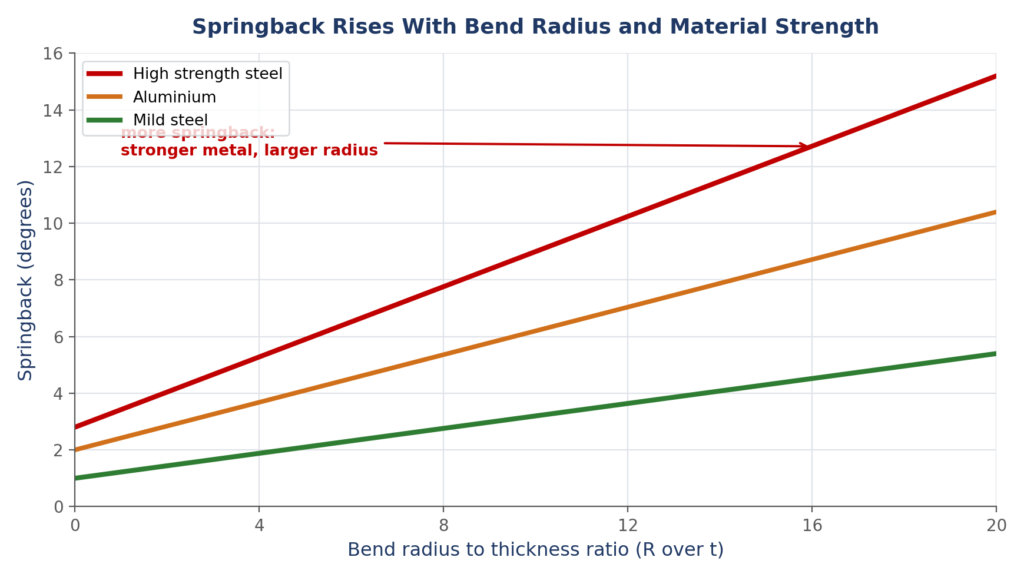
Metal bent to an angle does not stay there, it springs back elastically toward flat. The springback grows with the bend radius and the material’s strength, so you must overbend to land on the angle you want.
When you bend sheet metal, only part of the bend is permanent. The outer fibers yield and stay bent, but the metal near the neutral axis is only stressed elastically, and when you release the press that elastic part springs back, opening the angle toward flat. The amount is not small and not constant: it grows with a larger radius, thinner material, and above all a stronger, higher yield metal, so the same tool gives a different angle on mild steel, high strength steel, and aluminium. To hit ninety degrees you overbend past it by an amount set by the material and radius, and get that wrong and every part is out of angle.
The cost. Bent parts that come out open, at the wrong angle, because the springback was not allowed for, a whole batch off by a few degrees that will not fit.
The fix. Bend for springback, not to the nominal angle. Overbend by the amount the material and radius require, tune it in with test bends on the actual metal, coin the bend where the angle must be exact, and never assume the tool gives the angle it is set to.
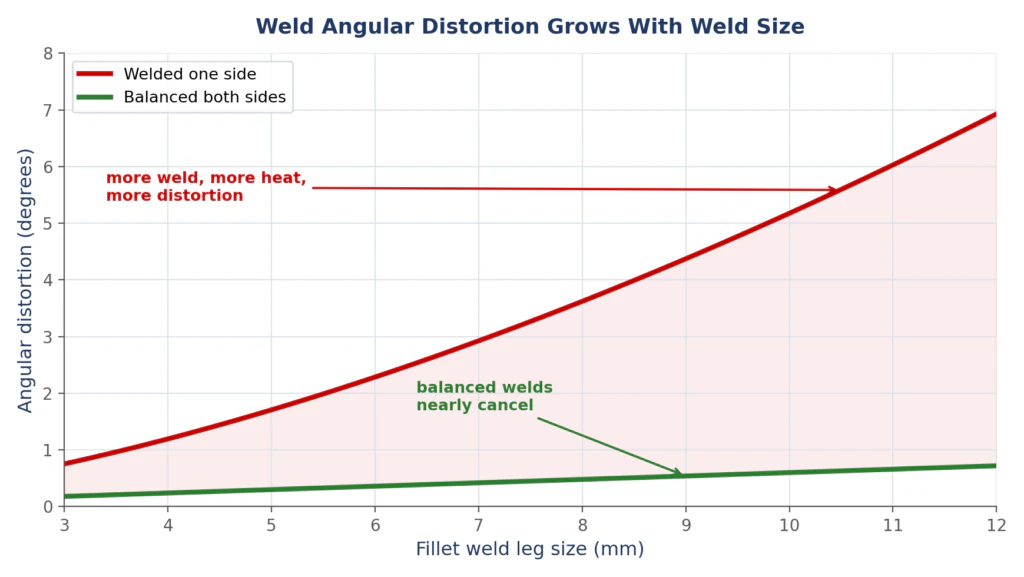
A weld shrinks as it cools and pulls the metal toward it, bending the plate up at the joint. The distortion grows with weld size and is far worse welded from one side than balanced across both.
A weld is molten metal that shrinks as it freezes and cools, pulling the surrounding plate in with it. Lay a weld along one side of a joint and the shrinkage bends the plate up toward it and runs it shorter along its length, so a frame that was square pulls into a parallelogram, a flat plate bows, and a beam bends toward its welds. The bigger the fillet and the more passes, the worse it gets, and welding one side only is far worse than balancing the welds across the joint. The metal is dragged out of shape by its own cooling welds, and unless it is planned for, the assembly comes out bent.
The cost. Frames pulled out of square, plates bowed, and assemblies bent out of tolerance by weld shrinkage alone, needing straightening or scrapping.
The fix. Control the weld distortion. Balance welds across the joint so the shrinkage cancels, use the smallest weld that carries the load, sequence and tack to spread the heat, and set the parts tilted against the movement so they pull flat, building the distortion out rather than straightening after.
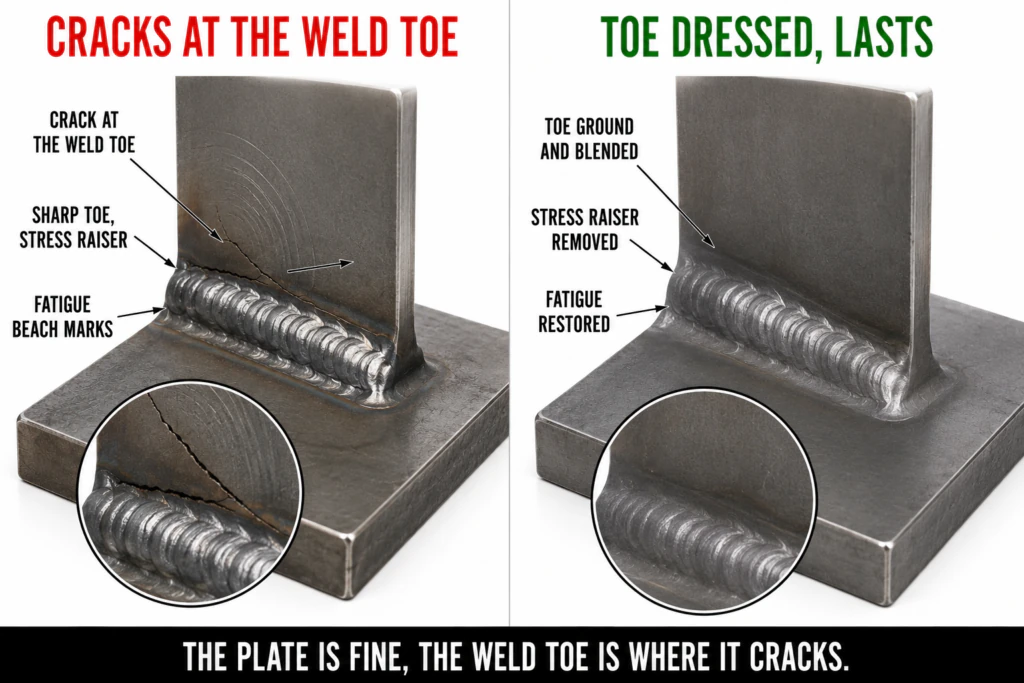
The sharp valley where the weld meets the plate is a stress raiser, and under cyclic load a fatigue crack starts there long before the plate itself would fail. The weld toe is the weak point.
A welded joint under cyclic load rarely cracks in the plate or through the weld, it cracks at the weld toe, the sharp line where the weld meets the parent plate. That toe is a stress raiser that often hides tiny welding flaws too, so it concentrates stress right where the joint is loaded. Under repeated load a crack starts at the toe and grows into the plate, at a stress far below what the solid plate could carry, which is why a welded joint’s fatigue strength is a fraction of the material’s own. The plate can be sound and the weld full strength, and the assembly still cracks, because the toe between them is the weak point.
The cost. Fatigue cracks starting at the weld toe at a fraction of the plate’s own fatigue strength, from the stress raiser at the join, even when plate and weld are both sound.
The fix. Treat the weld toe as the fatigue site. Grind and blend the toe smooth where fatigue matters, choose details with gentle toe transitions, keep the highest cyclic stress off the toes, and check the joint to weld fatigue rules, not the plate’s own strength.
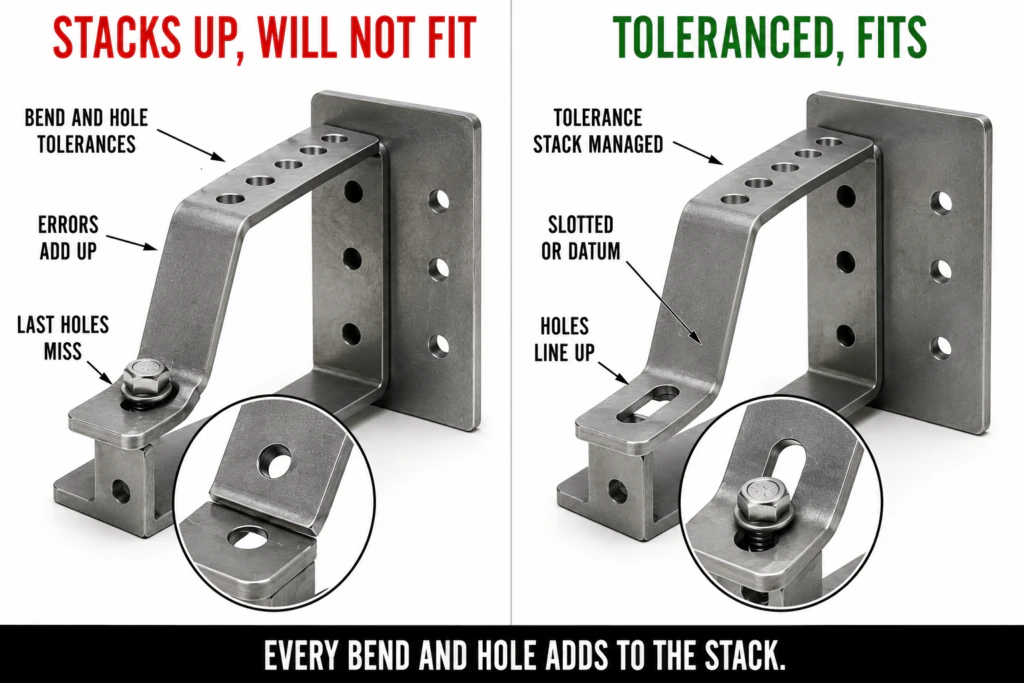
Every bend angle, bend position, and hole has a tolerance, and along a folded part they add up. A stack of small, acceptable errors can leave the last feature well out of place.
A sheet metal part is a chain of features, each with its own tolerance: the blank is cut, each bend placed and made to an angle, each hole punched. The errors accumulate, because each bend carries everything beyond it, so a small error in a bend angle near one end swings the far end a long way, and the last hole is the sum of every tolerance before it. Add a few bends and a mating part and the stack can put a hole well out of place, so parts each within tolerance still will not line up. The flat pattern hides this, the stack only appears when the real folded parts are assembled.
The cost. Folded parts and assemblies whose features do not line up, holes that miss and edges that clash, because the bend and hole tolerances stacked even though each was within limits.
The fix. Design for the tolerance stack. Add up the tolerances along the part and across the assembly, dimension from a single datum rather than bend to bend, put slots or clearance where the stack lands, and hold only the few tolerances that matter.
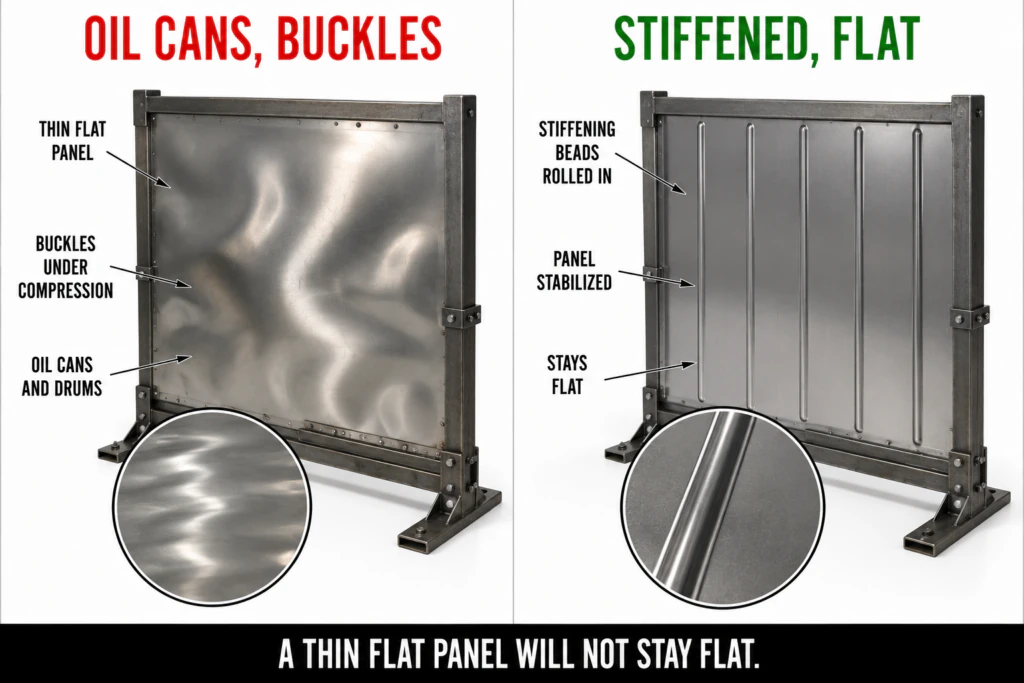
A large thin panel has almost no stiffness out of plane, so a little compression, from a load or from weld shrinkage, buckles it. It oil cans, dishes, and drums instead of staying flat.
A wide, thin panel is very stiff in its own plane and almost nothing out of it, so the smallest push sideways buckles it. A little in plane compression, from a load, a panel pushed into a frame, or a weld shrinking along its edge, is enough to pop it out of flat into a dished or wavy shape. This is oil canning, the panel snapping between a bulged in and a bulged out state, drumming when pressed, and it is a stability problem, not a strength one, the panel has simply buckled because it is too thin and flat to resist. A large flat panel that must stay flat almost always needs help.
The cost. Thin panels that oil can, dish, and drum instead of staying flat, from a little compression or weld shrinkage, looking defective though nothing has yielded.
The fix. Stiffen the panel out of plane. Roll in beads, swages, or ribs to break up the flat and raise the buckling load, add flanges or edge stiffeners, use a thicker gauge or a formed curvature where flatness matters, and keep edge compression off large unsupported panels.

A flat pattern can call for a bend on top of a hole, a corner with no relief, a flange too short to grip, or a weld in a place no torch can reach. The fabrication rules decide what can actually be made.
Sheet metal fabrication has its own rules, and a drawing that ignores them cannot be made cleanly. Put a hole too close to a bend and the bend distorts it, leave no relief where two bends meet and the corner tears, make a flange too short to grip and it cannot be bent, place a weld in a tight internal corner and the torch cannot reach. None of these shows on the flat pattern, they come from how the metal is bent, punched, and welded, and each turns into a distorted, torn, or impossible feature at the brake or the bench. A sheet metal design has to be drawn for the process, with the bend, hole, and weld rules built in, not just a shape that looks right flat.
The cost. Holes distorted by nearby bends, corners torn for want of a relief, flanges too short to form, and welds no torch can reach, all found at the brake or the bench, not on the drawing.
The fix. Design to the fabrication rules. Keep holes and forms far enough from bends, add bend relief at corners, keep flanges long enough to form, give every weld access, and check the flat pattern against how the part will really be bent and welded before release.
A sheet metal weldment is a flat sheet fought into shape and then heated until it moves, and almost everything that goes wrong comes from that, not from the metal being weak. It springs back from every bend, distorts as its welds cool, cracks at the weld toe, stacks up its tolerances along the folds, buckles when it is thin, and can be drawn in ways the brake and the torch cannot make. Only one of those six is a crack, the rest are springback, thermal distortion, a tolerance stack, a buckling panel, and a fabrication rule, and every one can leave the part bent, misfitting, or scrapped. Overbend for the springback, balance the welds, dress the toes, add up the stack, stiffen the panels, and respect the fabrication rules, and it comes out straight and strong. Draw it as a solid part that happens to be thin, and it will not stay flat.
At Developmech, we do the engineering behind sheet metal and weldments: springback and forming, weld distortion and sequence, weld toe fatigue, tolerance stack up, panel buckling, and the design for fabrication that makes a weldment straight, strong, and buildable. If you build things from bent and welded sheet, we are glad to take a look.
